


Here’s how to help
give your dog
more life to love.
You’re not alone in caring for your pet. Get expert information and guidance for helping to manage your dog's heart condition. You can make a difference in just a few simple steps.
Your dog’s condition
is manageable.
The most common heart disease in dogs progresses through different stages. The good news is that you can help manage progression, and a key component is following a simple treatment plan. By understanding the risks, getting regular check-ups, and knowing what signs to look for, you can help make sure your dog gets timely care, which could mean more time for you to enjoy with your dog.

About 1 in 10 dogs seen by a vet is diagnosed with heart disease.1,2
Follow the 3 Ms

Meet: See your vet for regular check-ups and appropriate screening/diagnostics

Monitor: Watch for signs and symptoms

Manage: Follow veterinary guidance, such as giving VETMEDIN® (pimobendan) if prescribed
Let’s take a look at what can happen at each stage of the disease. Keep in mind, not all dogs experience complete disease progression, but it's important to know when to act. Dogs who require treatment will need to receive it consistently for the rest of their lives.
Stage A

Stage B1

Stage B2

Stage C
Stage D

*Your vet can only confirm enlargement using diagnostics like X-rays
Know the facts about treating your dog.
Scroll through the examples below to read common myths and get a fact check to discover better ways forward when it comes to caring for your pet.
Myth
Our time together just got a lot shorter.
Fact
While emerging surgical treatments can address specific valve issues, they're uncommon and costly. Many dogs do well for a long time with daily care, medications, and regular check-ins with their vet.

Myth
Heart disease means my dog can't enjoy life anymore.
Fact
With the right treatment plan and routine, many dogs stay active and comfortable doing the things they love.

Myth
If my dog's symptoms improve, I can stop medication.
Fact
It's wonderful when your dog's symptoms improve. That doesn't mean the disease is cured. Never change or stop medication without your veterinarian's guidance.

Myth
My dog was started on VETMEDIN (pimobendan) in the early stage of disease with no symptoms, but months later, still has no symptoms. I should stop medication because it is no longer working.
Fact
If your dog is still not showing symptoms, that means VETMEDIN (pimobendan) is absolutely working to delay progression of disease. Never change or stop medication without consulting your veterinarian.

Myth
All medications containing pimobendan are made the same.
Fact
Consistency and reliability matter. VETMEDIN brand products are manufactured with strict quality controls. Every tablet or dose delivers the same strength and effect. Compound-manufactured medications can show batch to batch variability.

Myth
Product standards are not important for veterinary medications. I can trust whatever the veterinarian prescribes.
Fact
Published standards are crucial to demonstrate medications work. VETMEDIN brand products are approved by the FDA to treat dogs with heart failure due to mitral valve disease. Compound manufactured medications are not approved by the FDA for safety or effectiveness.

Here's how you know when to start treating.
Especially in the early years of a dog's life, there may be no signs of heart disease. It's usually discovered when the veterinarian hears a murmur for the first time (often caused by myxomatous mitral valve disease). While some dogs may not progress beyond this stage, your vet may recommend further diagnostics to guide the plan for monitoring and treatment. Even if your dog's heart disease is discovered in later stages, treatment is essential and has a huge impact on quality of life.
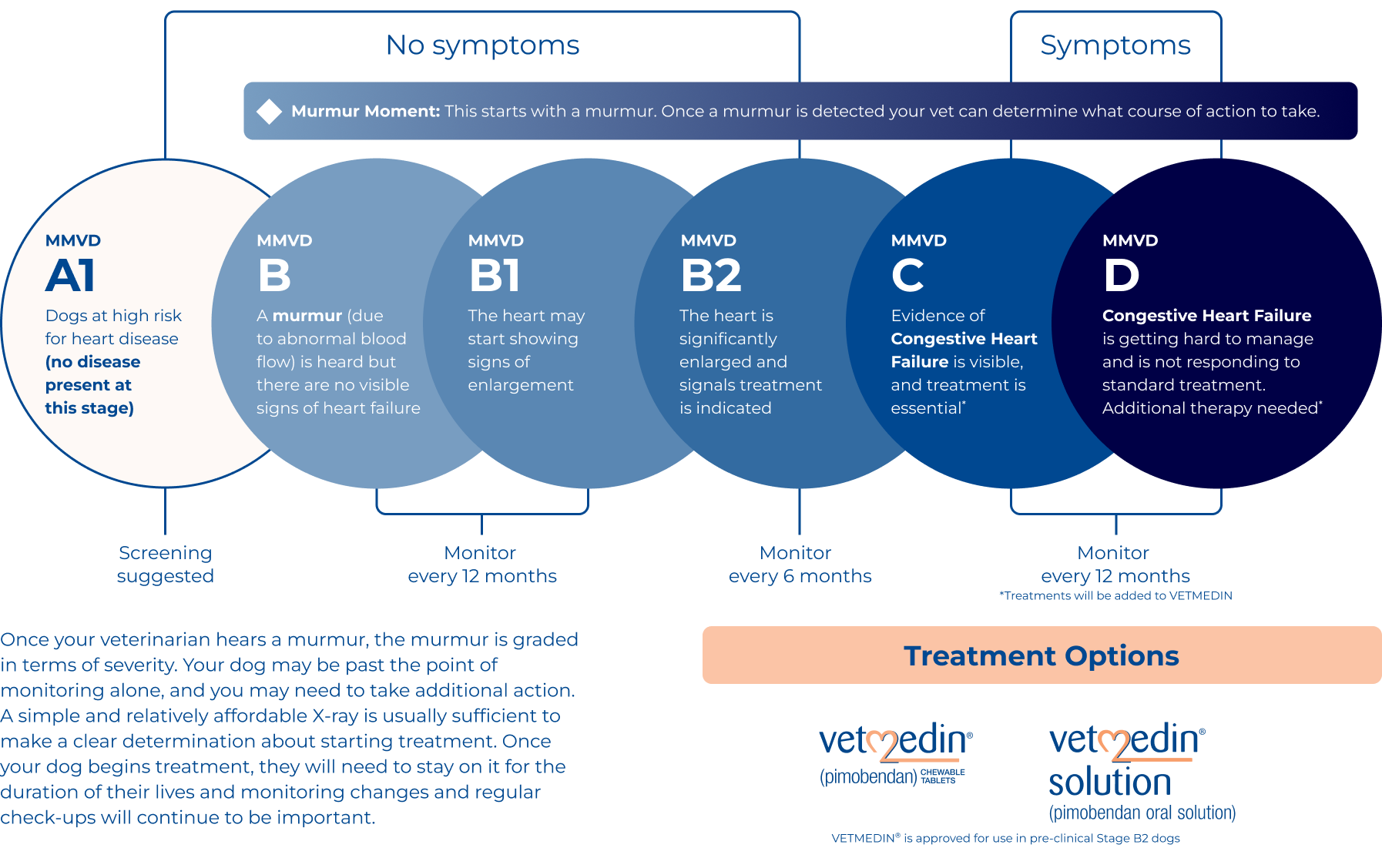
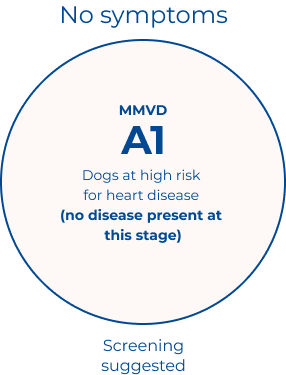
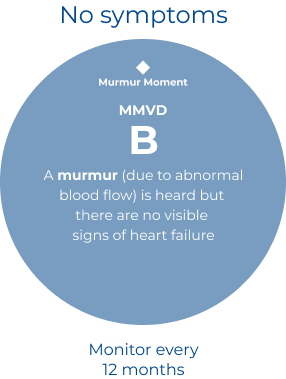
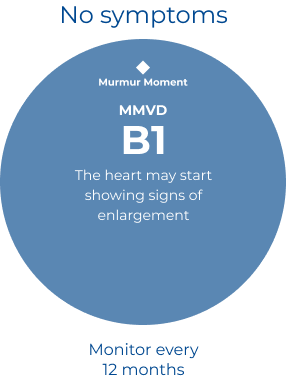
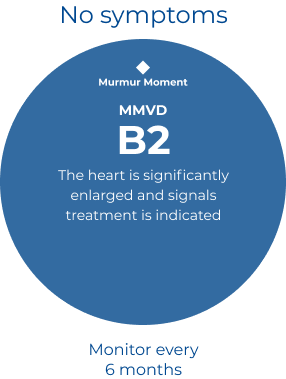
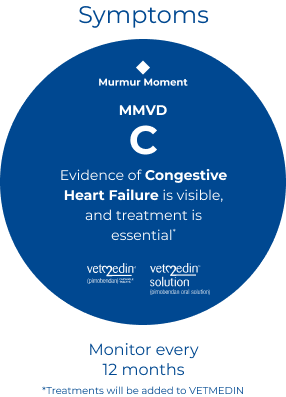
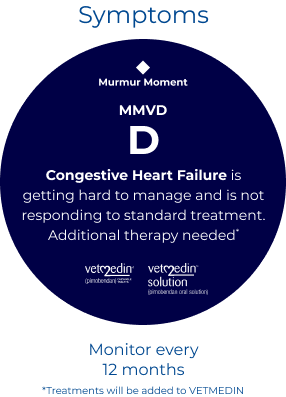
Once your veterinarian hears a murmur, the murmur is graded in terms of severity. Your dog may be past the point of monitoring alone, and you may need to take additional action. A simple and relatively affordable X-ray is usually sufficient to make a clear determination about starting treatment. Once your dog begins treatment, they will need to stay on it for the duration of their lives and monitoring changes and regular check-ups will continue to be important.

It may be helpful to understand these terms.
As you learn more about your dog's condition and partner with your vet, the following terms may help with your conversations and understanding of your dog's care.
ACE inhibitor: A class of drugs that helps relax blood vessels and makes it easier for the heart to pump blood.
American College of Veterinary Internal Medicine (ACVIM) Stages: ACVIM (Veterinary Scientific body) classifies myxomatous mitral valve disease (MMVD) in dogs into four stages, A through D, based on severity and progression.
Congestive Heart Failure (CHF): CHF is a condition where the heart muscle weakens or becomes inefficient, leading to an inability to pump sufficient blood throughout the body. Fluid can build up in the lungs, abdomen and other organs as a result. Once in failure, dogs can no longer compensate for the progressively ineffective heart, leading to a poorer quality of life and, without intervention, a poor prognosis.
Dilated Cardiomyopathy (DCM): More common in large-breed dogs, DCM is a heart condition where the heart muscles are weakened and cannot contract with as much force as normal.
Echocardiogram: This diagnostic test uses sound waves to create pictures of the heart. It can show blood flow through the heart and heart valves.
Electrocardiogram (ECG/EKG): This is a diagnostic test to check the heartbeat. It records the electrical signals in the heart to check for abnormal rhythms.
Heart disease: This is a general term that includes any condition that affects the structure or function of the heart.
Inodilator: A class of drugs that helps the heart pump more strongly and relaxes blood vessels to improve blood flow. (Note: VETMEDIN is an inodilator as it performs these dual therapeutic functions.)
Murmur: Murmurs are unique heart sounds produced when abnormal blood flow creates turbulence and is loud enough to hear with a stethoscope.
Myxomatous Mitral Valve Disease (MMVD): Common in small-breed dogs, MMVD is a degeneration of the mitral valves (the valves on the left side of the heart), which causes the valves to thicken and distort. This makes it harder for the heart to pump blood.
Radiographs (X-rays): Images that help veterinarians see the shape and size of the heart and lungs.
Resting respiratory rate (RRR): The number of breaths per minute while your dog is asleep.
No terms found in this range.
Important Safety Information
VETMEDIN® (pimobendan) Chewable Tablets and VETMEDIN® Solution (pimobendan oral solution) are for use only in dogs with clinical evidence of heart failure. The most common side effects reported in field studies were poor appetite, lethargy, diarrhea, dyspnea, azotemia, weakness, and ataxia. VETMEDIN® should not be given in case of hypertrophic cardiomyopathy, aortic stenosis, or any other clinical condition where an augmentation of cardiac output is inappropriate for functional or anatomical reasons.
For more information, please see full prescribing information for Solution or full prescribing information for Chewable Tablets.
VETMEDIN®-CA1 (pimobendan) are for use only in dogs with preclinical MMVD that have a moderate or loud mitral murmur due to mitral regurgitation and cardiomegaly (Stage B2 MMVD, 2019 ACVIM Consensus Statement1). VETMEDIN®-CA1 is conditionally approved by FDA pending a full demonstration of effectiveness under application number 141-556. A diagnosis of MMVD should be made by means of a comprehensive physical and cardiac examination, which should include radiography and echocardiography. The most common side effects seen in dogs with Stage B2 MMVD while taking VETMEDIN®-CA1 Chewable Tablets are cough, vomiting, diarrhea, lethargy and localized pain (such as in the neck or legs). Adverse reactions not related to disease progression in dogs receiving VETMEDIN®-CA1 included diarrhea, vomiting, pain, lameness, arthritis, urinary tract infection, and seizure.
For more information, please refer to the package insert.