
Heart Disease in Dogs

Heart disease is common—10% of dogs will be diagnosed with heart disease in their lifetime.1,2 Early intervention can help extend survival time, with a higher quality of life.


What is Heart Disease?
Heart disease in dogs refers to any condition that affects the normal functioning of the heart, its valves, or the blood vessels connected to it. Heart disease can either be present from birth or acquired over the course of your dog’s life. The majority of heart disease in dogs is acquired, usually due to general wear and tear, but occasionally through injury or infection. Even puppies and younger dogs may have heart issues. Dogs may not display signs of heart disease right away. Having your dog checked regularly by your vet can help detect or prevent heart problems in your dog.
Congestive Heart Failure (CHF)
CHF is a condition where the heart fails to adequately pump blood to the body, leading to fluid accumulation in various body tissues and organs. When fluid accumulates in or around a dog’s lungs, it prohibits the lungs from expanding normally and prevents oxygen from moving into the bloodstream properly. This can cause a variety of signs and health issues. Common causes of CHF in dogs include underlying heart diseases such as myxomatous mitral valve disease (MMVD) and dilated cardiomyopathy (DCM).

Signs of CHF
Depending on how severe a dog’s congestive heart failure is, signs may occur when a dog is resting, during mild exercise, or during moderate or extreme exertion. If any of these signs are noted in your dog, contact your vet as soon as possible.
Clinical signs can include:
- Coughing, especially during or after exercise or while resting
- Difficulty breathing or rapid, shallow breathing
- Tiring easily during physical activity or exercise intolerance
- Lethargy or weakness
- Decreased appetite or weight loss
- Abdominal distension or bloating
- Restlessness, pacing, or discomfort
- Fainting or collapse in severe cases
Major Types of Heart Diseases That Can Lead to CHF
Myxomatous Mitral Valve Disease (MMVD)
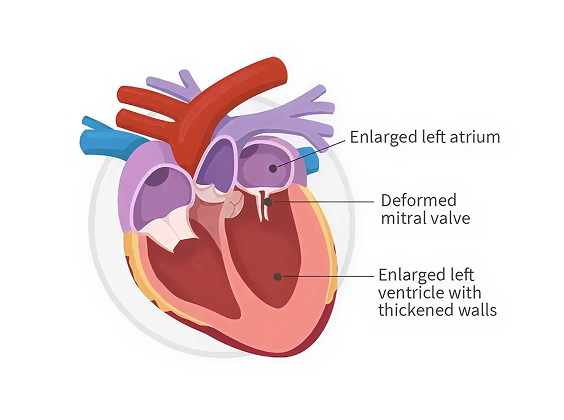
MMVD is the most common type of heart disease in dogs, particularly in small to medium-sized breeds. Dogs with this type of heart disease develop distorted heart valves, which no longer close properly. Vets can hear the backward blood flow, referred to as a heart murmur, with a stethoscope.
Predisposed dog breeds:
- Cavalier King Charles Spaniel
- Chihuahua
- Dachshund
- Maltese
- Miniature Poodle
- Miniature Schnauzer
- Shih Tzu
Dilated Cardiomyopathy (DCM)
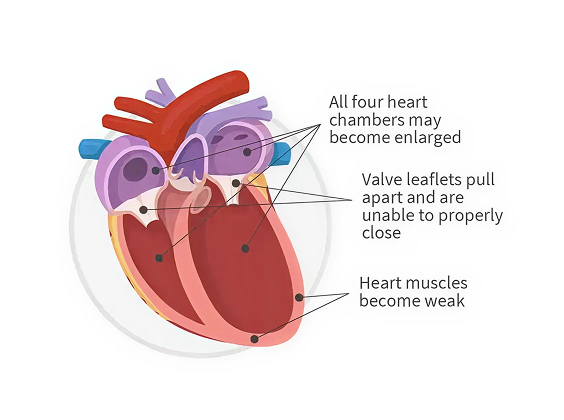
DCM is a condition most commonly seen in larger-breed dogs. The heart muscle of dogs with DCM is stretched and thinned, resulting in the heart being unable to effectively pump blood.
Predisposed dog breeds:
- Cocker Spaniel
- Doberman Pinscher
- Golden Retriever
- Great Dane
- Irish Wolfhound
- Labrador Retriever
Screening for and Treating Heart Disease
Early Screening for Heart Disease
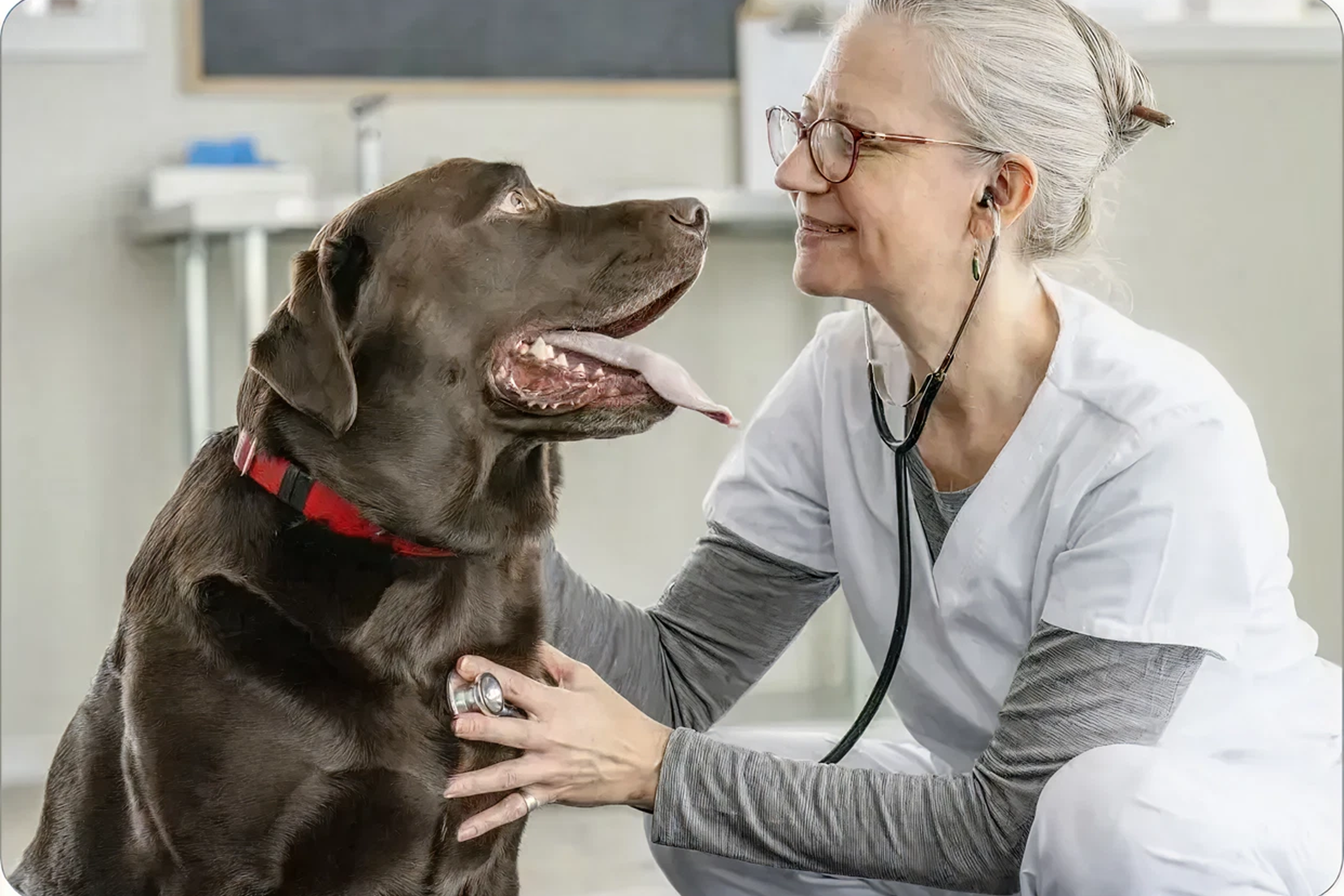
A vet diagnoses cardiovascular disease by reviewing a pet’s medical history, conducting a physical examination, and interpreting the results of specific tests or imaging procedures.
Early detection of heart disease can be found through chest x-rays, also called radiographs, which are used to detect potential heart enlargement. Regular veterinary checkups are an important part of managing your dog's cardiovascular health.

Treating Heart Disease
The goal of treatment is improving heart muscle performance, improving blood flow, slowing disease progression, and ultimately improving quality of life. Typically, dogs will be prescribed several medications. If the cause of CHF is a congenital abnormality, surgical correction may help to reverse heart failure. The vet wants to reduce fluid buildup and maximize the amount of blood being pumped to the lungs and the rest of the body. If left untreated, continued damage will occur, which can lead to worsening clinical signs.
Key Takeaways
-
Image

Dogs can be born with heart disease
Heart disease can either be present from birth or acquired over the course of your dog’s life.
-
Image

There are 2 common causes of CHF
Two common types of CHF are due to myxomatous mitral valve disease (MMVD) and dilated cardiomyopathy (DCM).
-
Image

The goal is to improve heart muscle performance
The goal of CHF treatment is improving heart muscle performance, improving blood flow, slowing disease progression, and ultimately improving quality of life.
-
Image

Every dog is different
Not all dogs with heart disease will go into CHF.
-
Image

CHF can be treated
CHF can be managed through medication, diet, exercise, and/or surgery.
-
Image

Work with your vet
Working with your vet is important to implement the proper treatment plan, which could include management medications.
Kathleen Buffington
Kathleen “Kat” Buffington graduated from the University of Georgia’s School of Agriculture with a degree in biology. She began an over decade-long career in the animal health industry where she’s pursued her passion: training and educating others in all aspects of animal health. Outside of her career, she enjoys spending time with her friends and family, including 2 cats and 2 dogs.

Important Safety Information
VETMEDIN® (pimobendan) Chewable Tablets and VETMEDIN® Solution (pimobendan oral solution) are for use only in dogs with clinical evidence of heart failure. The most common side effects reported in field studies were poor appetite, lethargy, diarrhea, dyspnea, azotemia, weakness, and ataxia. VETMEDIN® should not be given in case of hypertrophic cardiomyopathy, aortic stenosis, or any other clinical condition where an augmentation of cardiac output is inappropriate for functional or anatomical reasons.
For more information, please see full prescribing information for Solution or full prescribing information for Chewable Tablets.
VETMEDIN®-CA1 (pimobendan) are for use only in dogs with preclinical MMVD that have a moderate or loud mitral murmur due to mitral regurgitation and cardiomegaly (Stage B2 MMVD, 2019 ACVIM Consensus Statement1). VETMEDIN®-CA1 is conditionally approved by FDA pending a full demonstration of effectiveness under application number 141-556. A diagnosis of MMVD should be made by means of a comprehensive physical and cardiac examination, which should include radiography and echocardiography. The most common side effects seen in dogs with Stage B2 MMVD while taking VETMEDIN®-CA1 Chewable Tablets are cough, vomiting, diarrhea, lethargy and localized pain (such as in the neck or legs). Adverse reactions not related to disease progression in dogs receiving VETMEDIN®-CA1 included diarrhea, vomiting, pain, lameness, arthritis, urinary tract infection, and seizure.
For more information, please refer to the package insert.